Rust October 2026 Force Wipe Recap: Livestock, Biofuel and Powergrid Loot Rooms
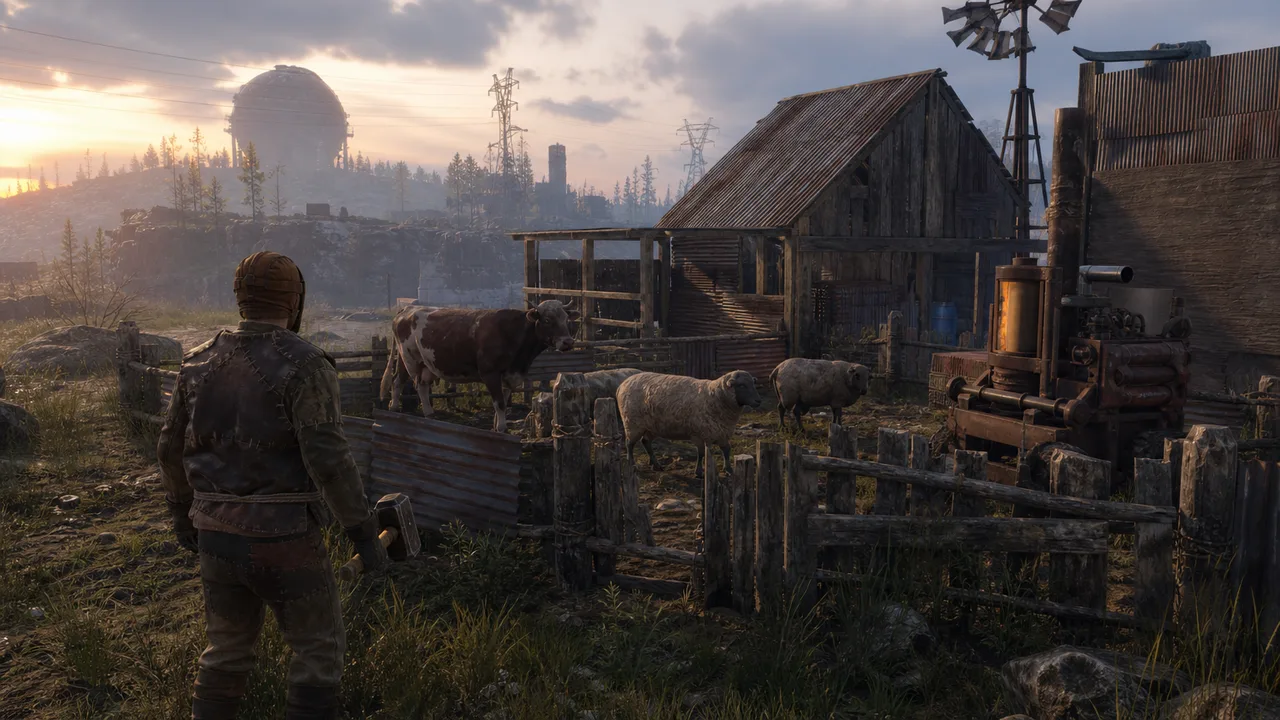
Confirmed: Rust’s October 2026 force wipe landed on 1 October 2026, led by a substantial farming expansion. Cows and sheep are now livestock with genetics, needs and breeding, while milk, wool and animal sales create new progression routes. The update also shipped the Biofuel Generator, reworked Sandbag Barricades, more Powergrid Lootrooms, a repair gate for Bandit Camp’s Air Wolf vendor and several client and memory optimisations.
For fresh servers, this is more than an animal-themed content drop. Early transport, monument routing, low-grade fuel production and defensive building have all changed. Here is what actually shipped and how it affects wipe day.
Livestock turns farming into a wider economy
Confirmed: Cows and sheep can be captured from the wild, kept inside player structures and bred. The new navigation system allows NPCs to enter structures and respond to doors opening and closing, making enclosed barns and livestock compounds practical. Dedicated animal fences and gates have also been added.
Like crops, livestock have genetics and needs. Facepunch cautions that animal genes do not behave exactly like plant genes, so established hemp-cloning methods should not be assumed to work unchanged. Players can selectively breed animals in search of stronger genetic combinations, creating a long-term objective for organised farming groups.
Both animals produce dung. Cows provide milk, while sheep provide wool. They can also be harvested for meat, bones and leather. Once grown, cattle and sheep can instead be led to the Stable and offered to its new vendor. The vendor generates a random offer influenced by the animal’s gene quality. Players may reject two offers, but rejecting the third leaves the vendor unwilling to buy that animal for 15 minutes.
Wool uses a similar offer system, with rewards based on how much is delivered at once and a maximum evaluated amount of 400 wool. Carrying a large shipment therefore promises a better opportunity but also puts more value at risk during the journey.
Milk creates new food and tea decisions
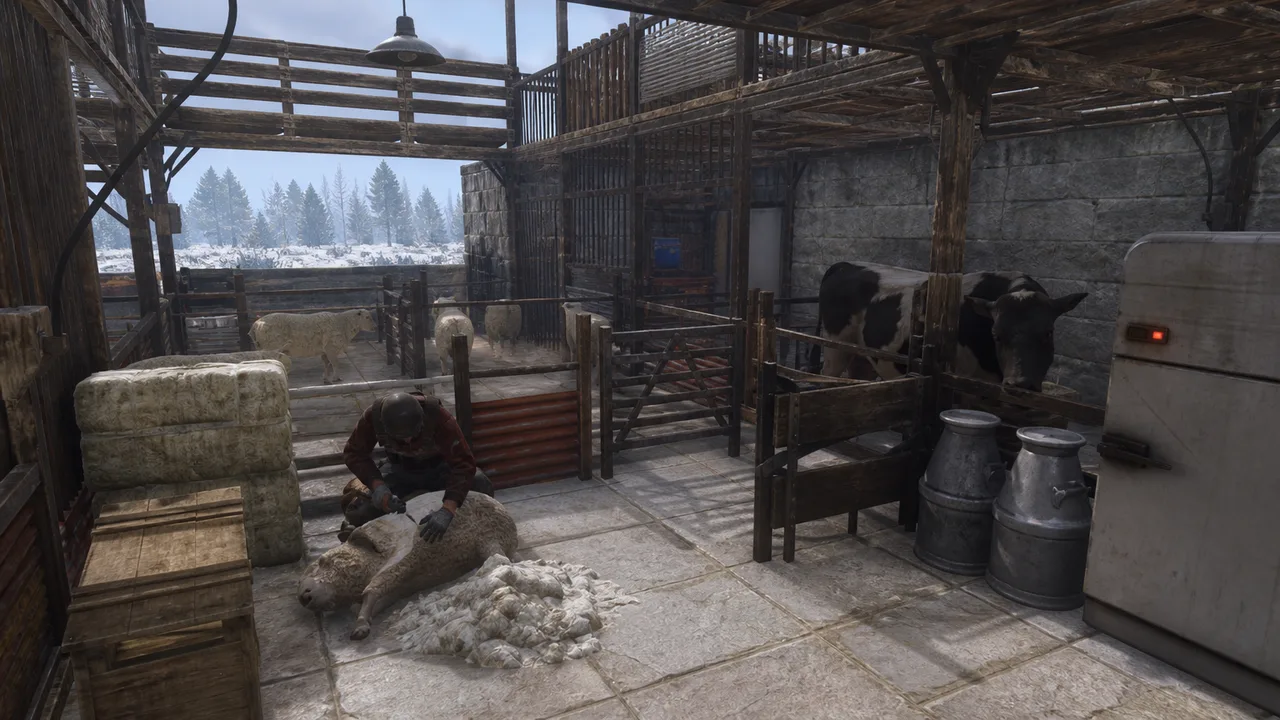
Confirmed: Fresh milk can be consumed immediately or refrigerated for four hours, after which it can be skimmed into Skimmed Milk and Cream. Cream is the stronger direct consumable, but both milk and cream also feed into new crafting recipes.
The important competitive effect is on teas. Milk generally extends the duration of tea effects, while Cream increases their potency. Farming groups now have a choice between consuming milk quickly, waiting for refrigeration or reserving the processed ingredients for enhanced buffs. On a fresh server, refrigeration infrastructure and a protected cow enclosure could become part of a serious farming base rather than a role-play luxury.
Community creator Keeno published a pre-release livestock overview covering taming, feeding, genetics, transport and sales. Treat its recommendations as community guidance; the mechanics and timings reported above come from the official 1 October update post.
Biofuel gives unwanted meat another purpose
Confirmed: The new Biofuel Generator converts organic matter, including raw or spoiled meat, into low grade fuel. It is manually operated: fill it, stir it and allow it to process. Facepunch says it runs for roughly 30 minutes before it needs stirring again, and its IO connection can signal when attention is required.
Output varies by input, with higher-calorie organic matter producing more low grade. This gives clans and farmers a use for food that would otherwise spoil, but the need for repeated manual interaction prevents the generator from being completely passive. Expect efficient compounds to place it near food storage and connect its status output to an alarm or indicator.
Air vehicles arrive later unless players invest
Confirmed: The Air Wolf helipad at Bandit Camp now begins each wipe in disrepair. Its vendor will not sell air vehicles until players rebuild the pad by contributing the required resources with a hammer, using a process comparable to constructing siege equipment. Once repaired, it remains operational for the rest of that wipe.
This is intended as a communal progression gate. A large clan can invest heavily to unlock helicopters early, but doing so opens the vendor for everybody on the server. Fresh-wipe teams should no longer plan around immediate access to Air Wolf purchases without first checking whether the helipad has been restored.
Server owners can disable the requirement with vehicle.padrepairsrequired or force the repair state with vehicle.setrepairablepads. Accordingly, community and modded servers may not follow the default progression.
Sandbags now stack into four defensive stages
Confirmed: Sandbag Barricades have been rebuilt around four stages. Placing another sandbag on top upgrades the existing barricade, increasing its height until the final stage becomes a pillbox-style structure. Existing sandbag skins are supported across the variations.
The crafting cost of each deployable has been reduced to account for needing multiple sandbags. Loot now awards them in stacks of four, and their maximum inventory stack size is 20. This should make sandbags more flexible for temporary cover, external positions and layered compound defence, although the official post does not provide new durability or raid-cost figures.
Powergrid Lootrooms expand monument routing
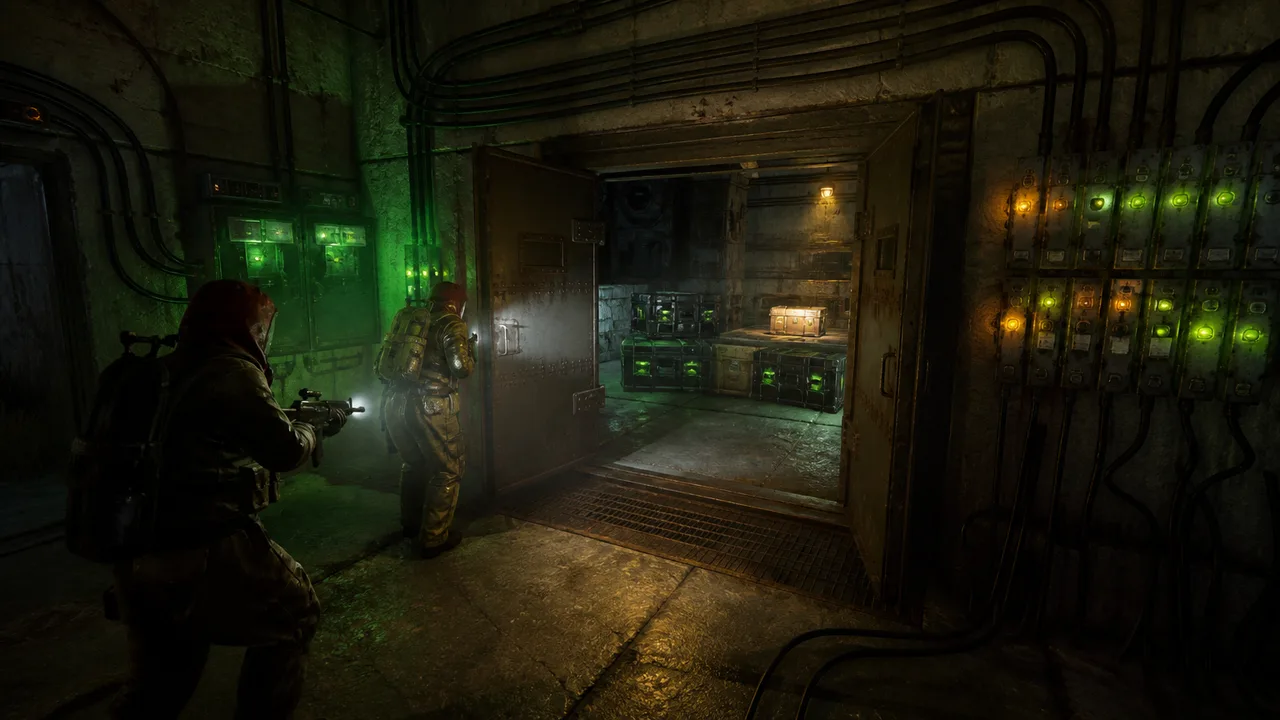
Confirmed: New locked Powergrid Lootrooms are distributed across Airfield, both Harbours, Ferry Terminal, Junkyard, Launch Site, Military Tunnels, Nuclear Missile Silo, Radtown, Sewer Branch, Trainyard and Water Treatment Plant. They open only when enough Heavy Fuses have been inserted at Power Plant to generate the required power. Harder monuments demand more fuses than beginner-oriented locations.
This makes the global power state relevant to many more roaming routes. Teams should check whether the grid is active before committing cards, protection and transport to a loot-room run. It also gives players another reason to visit or contest Power Plant even when their immediate destination is elsewhere.
Confirmed: Heavy Fuse decay now scales with online population. At 10 or fewer players, fuses last four times longer, gradually returning to the normal duration at 100 players. The small Heavy Fuse box at Power Plant has also moved to a position accessible through a broken exterior window. These changes should keep basic power phases available for longer on quieter servers.
Explosives should feel faster on higher ping
Confirmed: Grenades, C4 and Satchels now use client prediction. Instead of waiting for the server before displaying the action, the local client simulates the throw or placement and is corrected if its result disagrees with the server. The server remains authoritative, but high-ping players should perceive less delay when using explosives.
The update also refreshes the Machete model and animations, redesigns the country-selection interface and makes all four Ladder Hatch variants available to Workshop skin creators. Those variants are the square and triangle versions of both the standard and Armored Ladder Hatch. Keeno’s 1 October skin showcase gives community opinions on that week’s cosmetics, but its ratings and recommendations are commentary rather than official balance information.
Performance and rendering changes
Confirmed: Facepunch removed 133 duplicated hand meshes from weapon viewmodels, reporting a total saving of roughly 100MB. Store assets now load and unload with the relevant interface pages instead of remaining in core bundles. Facepunch reports approximately 250MB less RAM use at startup than the previous release build and around 450MB freed after closing the store and allowing its resources to unload.
Inverse-kinematics work has also moved to multithreaded jobs. In Facepunch’s 100-player scene test, the change saved around 1ms of frame time; the developer expects a smaller benefit when only a handful of players are visible.
The new custom Rust Render Pipeline is available under the Experimental settings tab. Facepunch expects slightly better performance in most areas initially, with further optimisation planned after the transition. Players can switch back to the original pipeline during this first month if they encounter problems.
Smaller wildlife has arrived too: frogs, rabbits, squirrels, sea turtles, crabs and jellyfish now appear in suitable biomes. Confirmed: they are currently designed mainly as ambient set dressing and operate under strict performance budgets.
What it means for wipe day
Do not treat livestock as instant profit. A viable operation needs secure space, food management, doors or fencing, refrigeration and a safe route to the Stable. Scout cows and sheep while gathering, but establish the enclosure before attempting to retain valuable genetics. Use Rust Labs for item information and calculators as the new economy develops.
Check Bandit Camp before budgeting for an air vehicle, because the default Air Wolf vendor remains closed until the server repairs its helipad. At the same time, watch Power Plant activity and the current grid state before routing through monuments with new loot rooms. Low-population players should benefit from slower Heavy Fuse decay, while high-pop servers can expect power access to remain more contested.
For base defence, carry sandbags in multiples and build them up according to the sightline you need rather than treating every deployable as a finished wall. Save surplus or spoiled meat for the Biofuel Generator, and wire its status output if your team is likely to forget manual stirring.
Finally, confirm your schedule with the force-wipe countdown, then test the October mechanics on our Rust servers. The strongest fresh-wipe plan is now one that accounts for delayed helicopters, server-wide power windows and livestock infrastructure without allowing those side projects to derail the usual priorities of tools, weapons and a secure base.