
Rust November 2026 Force Wipe Recap: Blueprints, Uzi and Major Optimisations
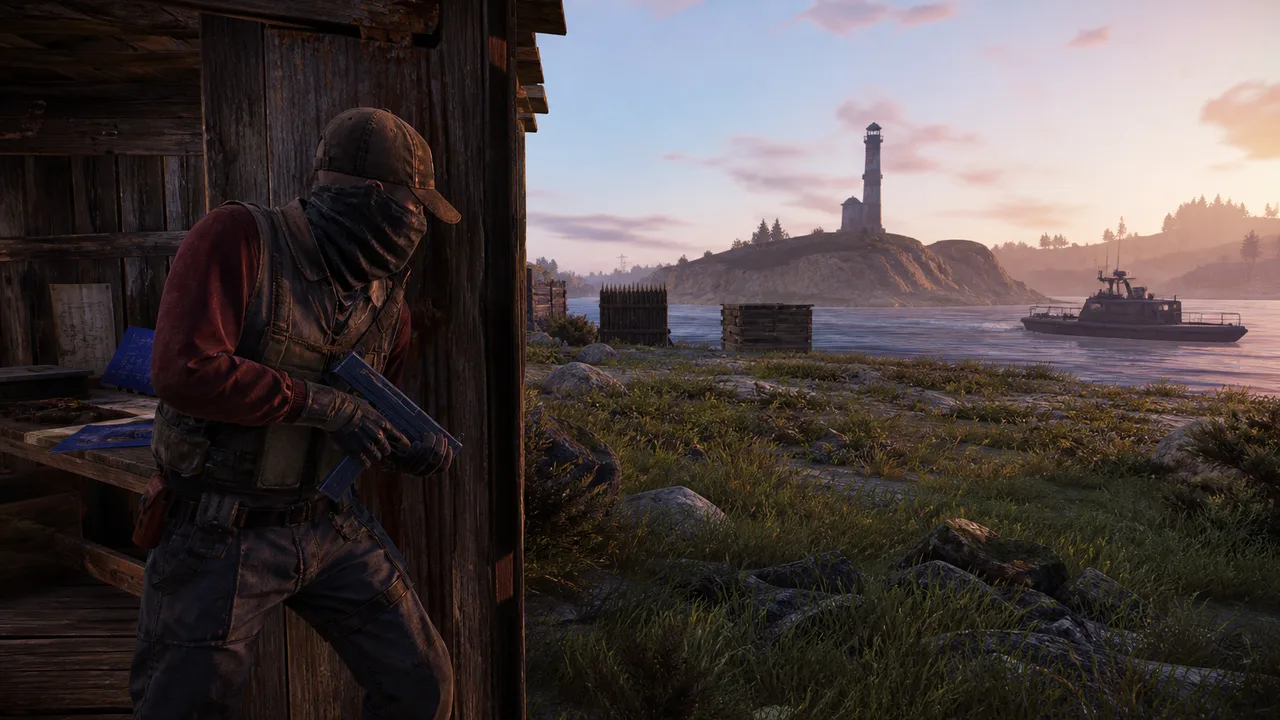
The Rust force wipe landed on 5 November 2026, bringing a fundamental progression overhaul alongside the new Uzi 9mm, extensive optimisation work and a long list of survival, building and farming changes. On fresh servers, the immediate story is no longer simply who can collect the most scrap: players must now secure, upgrade and trade three tiers of blueprint currency.
Everything described as shipped below comes from the official Facepunch update post. Where community videos offer opinions or suggested strategies, they are identified as commentary rather than confirmed balance information.
Blueprint progression has been rebuilt
Tech trees no longer consume scrap. Instead, each workbench tier uses its own blueprint currency: blueprint fragments, blueprint pages and blueprint books. Workbenches themselves also no longer require blueprint fragments to craft. Scrap remains relevant because players can still research individual items at a Research Table.
The lowest-tier blueprints appear in common sources such as barrels and boxes. More importantly, they can be upgraded into the next tier. Facepunch says puzzle rooms and harder content will remain the fastest progression route, but players who cannot dominate those locations are no longer completely locked out of advancing.
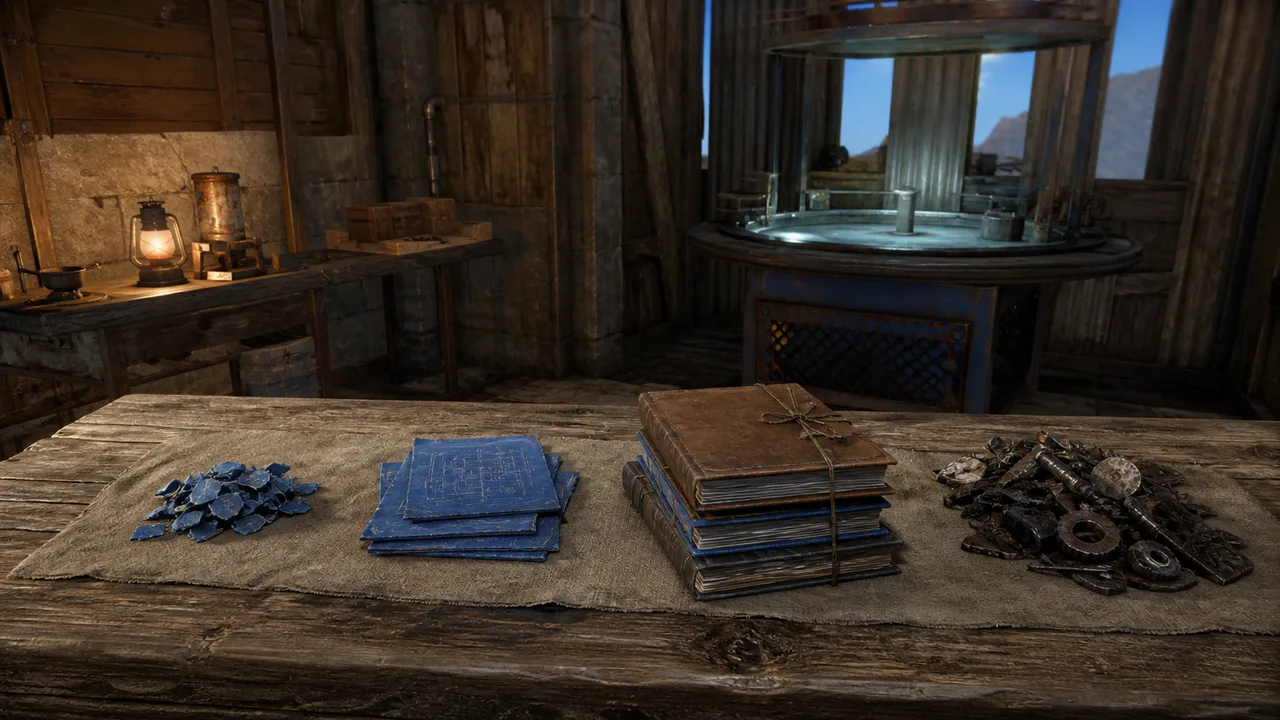
This changes early-wipe routing. Road farming should provide a dependable entry point, while monument teams retain a speed advantage. Because the currencies can be upgraded and valuable items can still be researched directly, groups must decide whether to build broad tech-tree access, convert lower-tier finds or spend scrap researching a specific weapon or utility item.
The workbench upgrades changed as well. The salvage upgrade now has a 20% chance not to consume a blueprint. The prototype upgrade has a flat 25% success rate, and its former cost-doubling mechanic has been removed. Facepunch explicitly says this is a first iteration and may be adjusted, so players should treat the opening-week economy as subject to future tuning.
A same-day community overview from Keeno characterises the update as removing blueprint fragments. The official wording is more precise: fragments still exist, but now serve as the Level 1 tech-tree currency rather than the previous workbench progression obstacle.
The Uzi 9mm joins the weapon pool
The new Uzi 9mm is a submachine gun with behaviour tied to its stock configuration. With the stock folded, it fires automatically and can be used with shields. Unfolding the stock converts it to semi-automatic fire and improves accuracy. Holding the fire-mode control switches between the two configurations.
That gives the weapon two clear roles on a fresh server: mobile close-range pressure in automatic mode and more deliberate shooting in semi-automatic mode. The official post does not provide crafting cost, damage or acquisition details, so firm conclusions about its place in the progression meta would be premature. Keeno’s Uzi attachment guide offers a community loadout opinion, but those recommendations are commentary rather than official balance guidance.
Performance is the other headline
Facepunch describes November as one of its biggest optimisation-focused updates. Its staging data showed an approximately 10% increase in median framerate, around 1.6GB lower total memory use and up to 25% less network traffic on a 500-player server.
The team also targeted stutters associated with firing weapons, loading bases and running Cargo Ship. Garbage collection is reported to occur about every 12 minutes rather than every six. These figures came from staging data, so individual results will depend on hardware, server population and the structures around a player. Building privilege checks also received optimisation work after being identified as particularly expensive around large bases.
Livestock is easier to manage
The livestock rework removes several punishments and exposes more information in the interface. Buying a cow, or having it eat from your trough, establishes ownership without requiring you to remain nearby. Cows no longer die from old age, while starving cows lie down at one health instead of dying. Troughs now estimate how long their food supply will sustain the herd.
Cows can eat any food accepted by horses, and the old grazed-bare overgrazing state is gone. Grass instead reduces trough consumption. Ownership, pregnancy, parentage and production cooldowns are displayed more clearly, while cows can store up to three milk. Players can also rename livestock and horses.
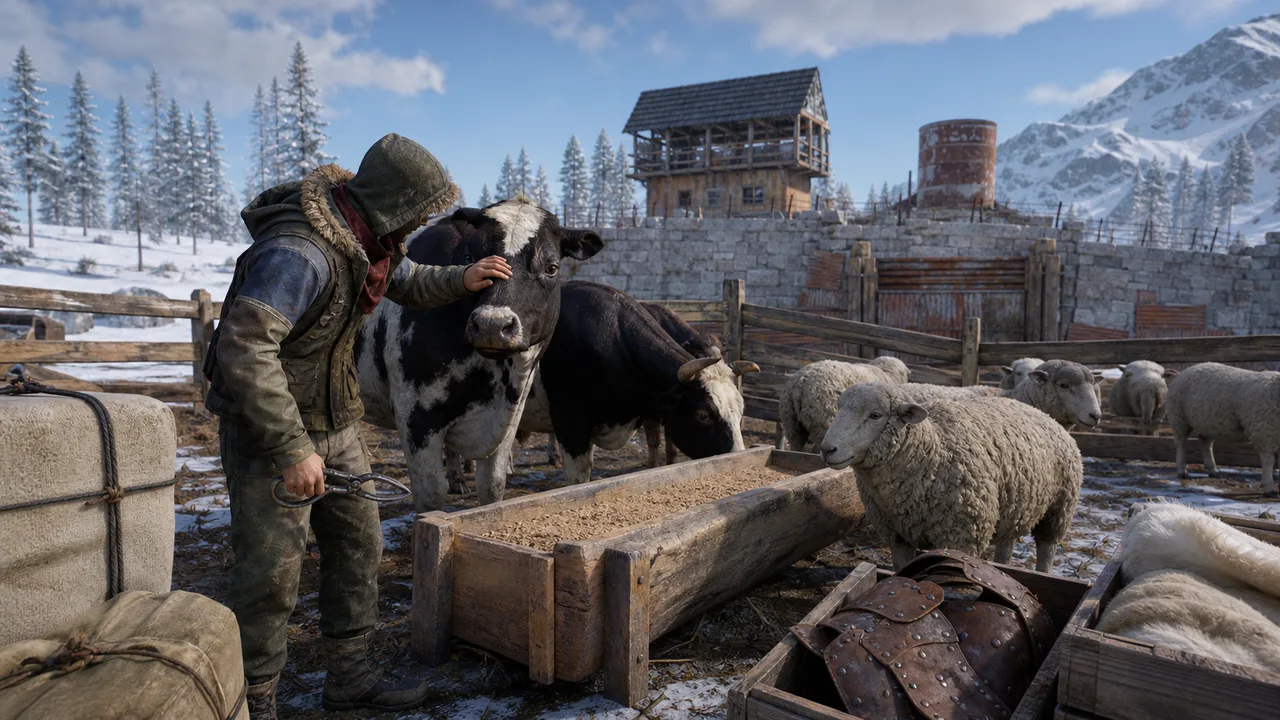
A new Potential statistic records how happy a captive-born animal was during childhood and locks when it reaches adulthood. Resource rewards are multiplied by that value, making good juvenile care economically important. Reproduction is capped for free-range owned cows and restricted indoors when space is insufficient. Players can now pet cows and sheep too.
Sheep farmers receive craftable shears, a default blueprint requiring Workbench Level 1. Shears produce more wool and cannot injure a sheep when a cut misses. Wool also feeds into a new Level 1 armour insert that grants modest melee and projectile protection plus a much larger cold-resistance bonus.
World events and survival tools changed
The regular deep-sea cycle now begins when a lighthouse is repaired, opening immediately before continuing normally. All lighthouses share progression, so repairing one repairs them all. Maps without a lighthouse start with the cycle active.
Rare scientist boats can now patrol around the mainland. Up to two groups may enter and remain for as long as an hour. They have no event marker or notification and only engage geared players under rules comparable to the Patrol Helicopter. Scientist boats also gained improved navigation and targeting, replacement drivers when the original driver dies, and rebuilt PT boat turrets.
Crows and seagulls add environmental warning signs. Crows circle corpses inland and can be frightened away by explosions. Seagulls gather over occupied coastal or water monuments, while resting coastal birds can be shot before they startle. Alert players can use those movements to infer nearby activity, although the birds may also expose their own position.
Crocodile meat can now become Crocodile Pie at the cooking workbench. It repels nearby wolves, bears, boars, sharks and bees; rams and bulls stop charging rather than fleeing. A rich version doubles the duration. Apples and coconuts can also appear on selected oak and palm trees, but should be harvested before the tree is felled to avoid reducing the yield.
Building and quality-of-life changes
Builders can deploy mirrored L and U stairs, flipping them with Shift and R during placement or using a hammer within ten minutes. Ramp placement and upgrading should be less obstructive, while building-skin collider inconsistencies have been corrected. Triangle frames should no longer take explosive splash damage through walls in the affected placements.
Random modular cars now spawn with half their engines filled with low-quality parts. Those supplied parts remain locked until the vehicle is placed on a car lift, preventing immediate recycling. Other practical changes include draggable map markers, berry seed extraction, improved small-tree hit detection, lower DPV fuel use, no DPV condition loss when picked up and faster DPV acceleration.
The Handmade SMG deals slightly more damage, the Nailgun has refreshed visuals and animations, and grenade-type items have new drop and attachment animations. Four telephone-directory contacts can provide a weather forecast, power-grid status, travelling-vendor countdown or apartment availability. Steam Input gamepad support also covers core gameplay, although Facepunch cautions that not every feature has dedicated controller support yet.
What it means for wipe day
Prioritise common containers immediately, but do not abandon puzzles: barrels and boxes establish your blueprint income, while dangerous monuments remain the fastest route. Coordinate blueprint upgrades within a team, avoid duplicating unlocks unnecessarily and reserve scrap for targeted Research Table use when one item matters more than broad tree progression.
Watch coastlines for unmarked scientist patrols, use bird activity as reconnaissance and reconsider livestock as a serious early economy now that starvation and ownership are less punishing. Cold-region groups should investigate wool production and the new armour insert, while vehicle users can get randomly spawned modular cars moving with fewer scavenged components.
Use Rust Labs to check items and calculators as the new economy settles, follow the next reset with our Rust force-wipe countdown, or put the changes into practice on our Rust servers.